

Migraines And Neurofeedback

A migraine is much more than a headache. It is a debilitating neurological condition that can cripple even the strongest person and leave them unable to function. Migraines do not always respond to aspirin or normal headache remedies and can include sensitivity to light and sound. An estimated 13% of adults in the U.S. experience.. read more →
Lyme Disease And Neurofeedback
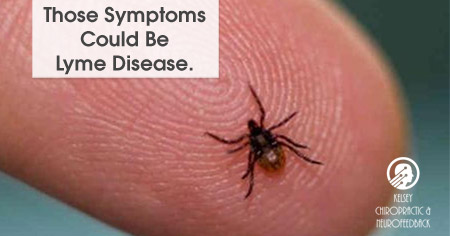
Lyme Disease is an infectious disease caused by a tick bite lasting more than 48 hours. It is estimated that 300,000 people become infected with Lyme Disease every year. Many people don’t know they are infected. But if it goes untreated, the infection can spread to the joints, the heart and the nervous system. Patients.. read more →
Could Your Brain Be Telling You Something?
Our brains are very good at letting us know when something is wrong. Being tired, angry or just confused could be signals that the brain needs attention. However, fatigue may not just be a lack of sleep. Likewise, anger may be more than a reaction to present events. It could be that the brain is.. read more →
Tension Headaches and Neurofeedback
From Healing Young Brains by Robert Hill, Ph.D. and Eduardo Castro, M.D. TENSION HEADACHES “The second type of headache we see is the tension headache. We generally approach this type of head pain similarly to the way we approach stress and anxiety. The muscle contraction, or tension, headache is different from the migraine. It is.. read more →
Migraine Headaches and Neurofeedback

From Healing Young Brains by Robert Hill, Ph.D. and Eduardo Castro, M.D. “To simplify the problem, migraines are due to the dilatation of the scalp arteries, in other words, there is too much blood in the scalp arteries. This type of headache usually starts with vasoconstriction ( a narrowing of arteries that reduces the blood.. read more →
Seizure Reduction through Neurofeedback

Healing Young Brains by Robert Hill, Ph.D. and Eduardo Castro, M. D. This may sound like an awesome task, but Dr. Sterman and his colleagues were able to train cats to make more SMR. This is not fantasy or magic, it is simply a training program. If we give the brain information about how inside-the-skin events.. read more →
Seizures and Neurofeedback Therapy

From Healing Young Brains by Robert Hill, Ph.D., and Eduardo Castro, M.D. “Seizures are caused by abnormal and excessive amplitude brainwave spiking. The spikes are known as epileptiform discharges That means that you get a very high spike(s) in the brainwaves. It is like a strong burst of energy in a particular area of the.. read more →
Seizures, Neurofeedback & Cats!
So what do cats have to do with seizures? Read on to find out. Perhaps one of the most interesting issues in using neurofeedback to treat disorders is the fact that almost all of our early research was on the treatment of drug-refractory cases of epilepsy. now, most neurofeedback therapists see very few cases of.. read more →
Cognitive Decline & Dementia

Mild Cognitive Impairment duration is 7 years. Mild Alzheimer’s is 2 years. Moderate Alzheimer’s 2 years, and Severe Azheimer’s is 3 years. As the disease progresses, Alzheimer’s spreads throughout the brain impairing many brain areas and the function associated with those areas. Neurofeedback’s Brain Brightening Program helps slow this process down and in many cases.. read more →
Obsessive-Compulsive Disorder: Anatomy and Neurofeedback

Neurofeedback in the Treatment of Developmental Trauma by Sebern F. Fisher, M.A. foreward by Bessel van der Kalk, M.D. “Obsessive-Compulsive Disorder (OCD) is known to be a problem of overactivation of the anterior cingulate. This structure misfires and its signals are transmitted over neural networks that connect the cingulate to other structures. OCD is also.. read more →