Our Core Service
About Neurofeedback
Achieving optimal brain function through non-invasive, drug-free brain training.
Our Core Service
Achieving optimal brain function through non-invasive, drug-free brain training.
What Is It?
Neurofeedback is a computer-based therapy that monitors and corrects unhealthy brainwaves while the user is engaged with an activity on the computer. While drugs address symptoms, neurofeedback targets the brainwaves that cause those symptoms.
The process is safe, non-invasive, enjoyable and has decades of qualified research. It could be the most important new tool for mental and neurological health available today.
How It Works
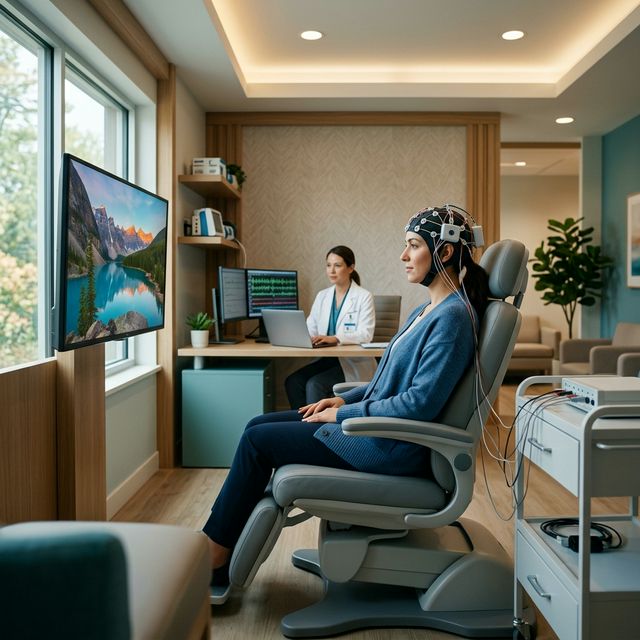
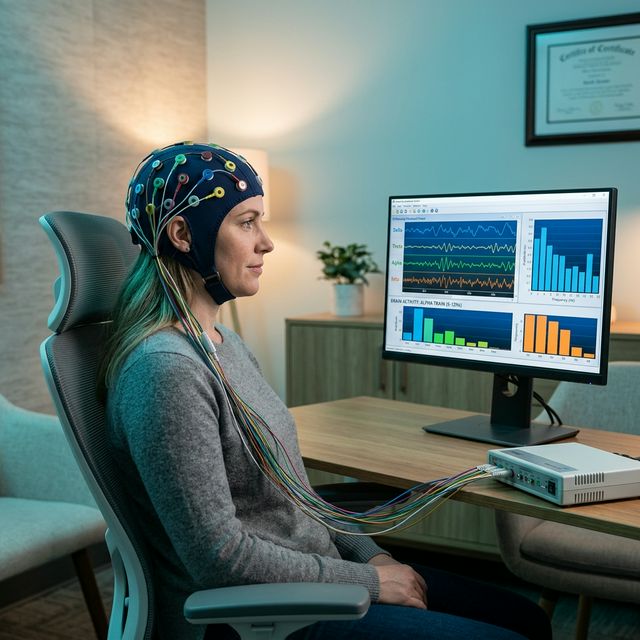
Patients are connected to a computer using non-invasive sensors. No electrical current is put into the brain — the sensors only monitor brainwaves.
For 30 minutes, you watch a movie, listen to music, or an audio book. When the computer detects irregular brainwaves, it fades the video and sound, causing you to refocus.
After multiple sessions, the brain learns to stay in healthy ranges on its own. Patients see a reduction in symptoms. Results are often permanent.
The Science
Research shows that people who suffer from neurological issues have irregular brainwaves. A person with ADD will have slower Beta brainwaves, which are responsible for attention and focus.
Training the brain can change these brainwaves over time, speeding them up or slowing them down where needed. Neurofeedback can improve alertness, attention, emotional regulation, behavior, cognitive function, and mental flexibility.
Results are often permanent, which may allow someone to eliminate medications completely. Where medications only manage the symptoms, neurofeedback addresses the underlying cause and restores normal brainwave function.
Conditions Clinically Responsive
ADD & ADHD
Anxiety
Depression
Insomnia
PTSD
Bipolar
Memory Loss
Concussion / TBI
Migraines
OCD
Autism Spectrum
Addiction
Schedule Consultation
Schedule a comprehensive 19-sensor QEEG Brain Map and cognitive evaluation at our office. Includes a detailed report of findings and a personalized consultation.