
Diagnostic Technology
QEEG Brain Mapping
How we determine your condition — accurately and non-invasively.
Diagnostic Technology
How we determine your condition — accurately and non-invasively.
The Technology
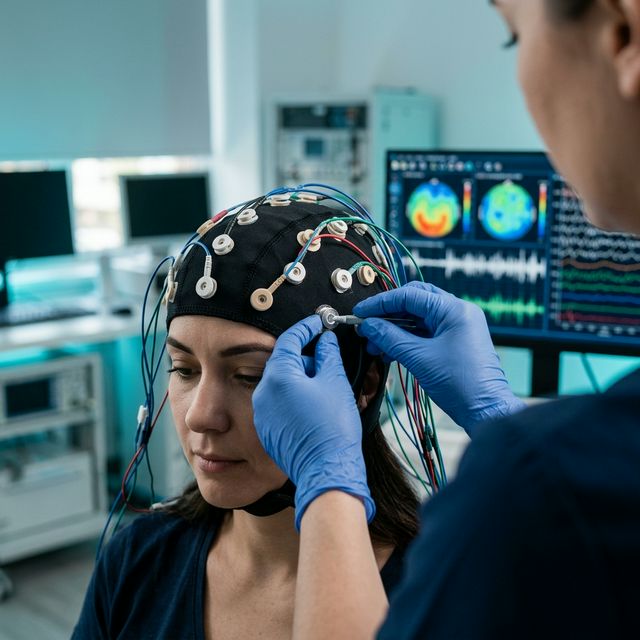
This is achieved with a Quantitative Electroencephalography (QEEG), also known as a brain map. A Brain Map is a non-invasive tool we use to identify the problem areas of the brain.
Think of a QEEG brain map like a weather map — it provides us with accurate information about the entire brain and where problems may lie.
The Process
We place what looks like a swim cap with sensors on your head to measure brain wave activity. The process is completely non-invasive.
You stare at the wall for 6 minutes with eyes open, and 6 minutes with eyes closed. No shocks, no pain, no discomfort. The computer does the rest.
The system compares your brainwave activity to established standards of normal brain function, stratified by age and gender.
From Map to Treatment
While neurofeedback is the training mechanism we use to correct brain imbalances, a brain map is the diagnostic tool we use to determine where problems lie within the brain.
The brain map generates a list of training protocols to target the areas most in need of help. Over time with multiple sessions, the brain corrects itself and learns to self-regulate on its own. Results are often permanent.
Schedule Your Brain Map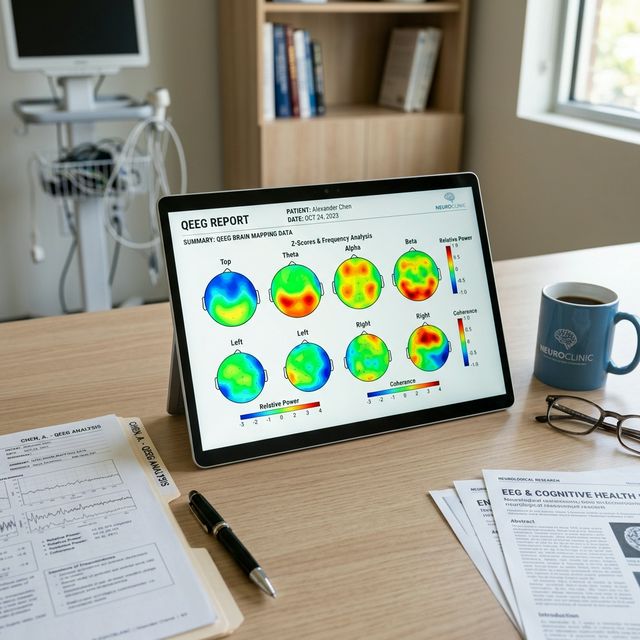
Brain Science
There are 4 main brainwaves, and each regulates a different part of our body. From sleep to emotions to critical thinking — let's learn about each one.
Observed while awake — conscious thought, logical thinking, focus.
Too much: Anxiety, stress, inability to relax Too little: ADHD, depression, poor cognition Optimal: Conscious focus, memory, problem solvingBridge between conscious and subconscious — calm and relaxation.
Too much: Daydreaming, inability to focus Too little: Anxiety, insomnia, OCD Optimal: RelaxationInvolved in daydreaming, sleep, and deep emotions.
Too much: ADHD, depression, hyperactivity Too little: Anxiety, poor emotional awareness Optimal: Creativity, intuition, relaxationSlowest waves — deepest relaxation and restorative sleep.
Too much: Concussions, learning problems, severe ADHD Too little: Poor sleep, inability to rejuvenate Optimal: Immune system, deep sleep, natural healingSchedule Consultation
Schedule a comprehensive 19-sensor QEEG Brain Map and cognitive evaluation at our office. Includes a detailed report of findings and a personalized consultation.